








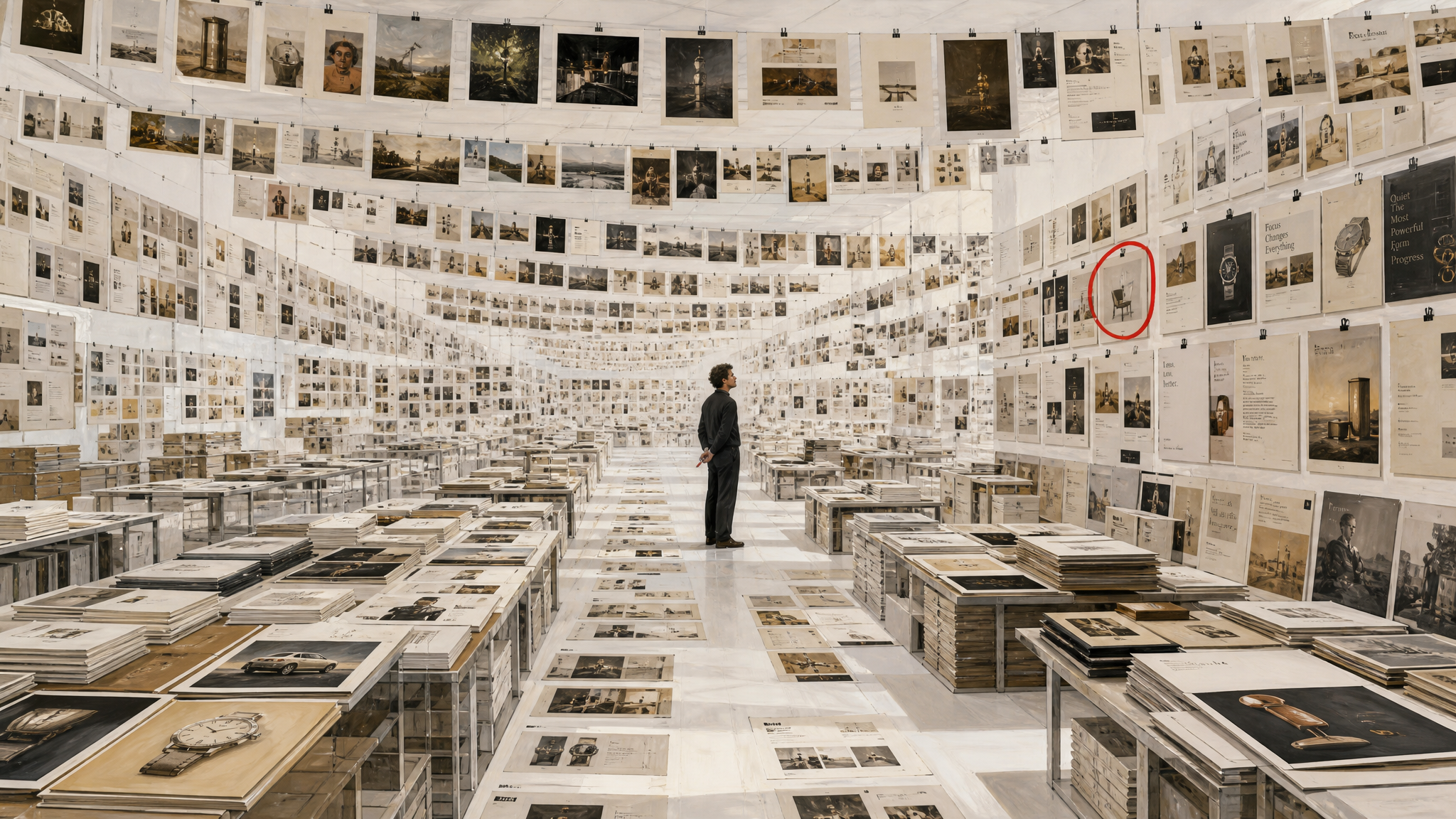
For decades, the hardest part of creative work was making things. Getting an idea out of your head and into the world required tools, time, and usually other people. A logo needed a designer. A video needed an editor. A marketing campaign needed an agency. The production process was the barrier, and most people never made it past it.
That barrier is gone.
AI tools have made production faster than anyone predicted. Drafts appear in seconds. Images generate on demand. Variations multiply without effort. And now, with platforms like Supercool, developed by Famous Labs, the work does not stop at a single output. Its agentic AI keeps going after the first result, building variations, reformatting assets for different platforms, and delivering finished work in a single session, without the user needing to switch tools or start over.
Users are producing hundreds of ad variations in under an hour. Projects that used to take weeks of freelancer coordination are being completed in minutes. The numbers are not marginal improvements. They represent a categorical change in how creative work gets done.
The Numbers Behind the Shift
The scale of what is changing becomes clearest when you look at real production timelines and costs.
One small business owner needed a branded vehicle wrap for his pressure washing company. Hiring an illustrator, a wrap designer, and a brand consultant through traditional channels would have cost over a thousand dollars and taken three to four weeks of back and forth revisions. Every round of changes meant more waiting. Every waiting period meant less time running the actual business, less time booking jobs, less time serving existing clients.
He gave Supercool one prompt and one reference photo. He had a print-ready, fully branded design in minutes.
That is not an isolated case. Creators and small business owners are reporting similar experiences across industries. Social media campaigns that previously required coordinating a photographer, a copywriter, and a designer are being produced in a single session. Brand assets that used to live across Canva, Adobe Creative Cloud, Midjourney, and stock image libraries are now generated, formatted, and finalized in one place.
The behavioral evidence is striking. Users are not adding Supercool to their existing creative stack. They are canceling the stack entirely. Subscriptions to Canva, Adobe, Midjourney, CapCut, Runway, and stock image libraries are being dropped as one platform absorbs the work that all of them used to share.
When Execution Gets That Fast, Something Fundamental Shifts
The bottleneck in creative work is no longer production. It is judgment.
For most of creative history, taste was abundant and production was expensive. Anyone could have an opinion about what looked good. Very few people could actually make it. That gap created an entire industry. Designers, agencies, production houses, and creative directors were all built around the ability to execute on a brief. The value was in the making.
Agentic AI is inverting that equation. Production is becoming fast and accessible. The scarce resource now is knowing what to make, what to say, and what to leave out.
This is not a small shift. It changes what makes a person or a business genuinely competitive. Having access to the best tools no longer separates anyone. Supercool is available to the solo founder with no budget and the enterprise marketing team with a large one. The tools are the same. What is not the same is the quality of thinking behind them.
Strategy, taste, and editorial judgment are now the primary drivers of creative output. The person who knows their audience deeply, who understands what a brand should and should not say, who can look at ten variations and immediately identify the right one, that person has a significant advantage that no AI agent can replicate.
What This Means for Creative Professionals
The natural question is what happens to the people whose careers were built on production skills. The honest answer is nuanced.
The work that gets automated first is the work that followed a clear brief. Template-based design. Asset resizing. Format conversion. Production tasks that were always more technical than creative. That category of work is shrinking and will continue to shrink.
What survives and what grows in value is everything that required genuine human judgment in the first place. Understanding a client’s brand well enough to know when something is technically correct but emotionally wrong. Knowing which variation resonates with a specific audience and why. Crafting a strategic narrative that holds together across every asset in a campaign.
The creative professionals who are thriving in this environment are not the ones resisting the tools. They are the ones using agentic AI to move faster, take on more work, and spend their time on the decisions that actually required their talent. A designer who once spent half a day preparing files for different platforms can now do that in minutes and redirect that time toward the creative thinking that clients actually pay for.
The ones most exposed are those whose entire value proposition was in the production itself, with little strategic or conceptual layer underneath. That is a real and difficult conversation for parts of the industry. But for the creatives who were always bringing more than execution to the table, this moment represents an expansion of leverage, not a threat.
What AI Cannot Do
Supercool does not tell you what your brand stands for. It does not understand the nuance of your customer or the cultural moment your campaign is trying to meet. It does not know when something is off in a way that data cannot explain. Those decisions still require a human, and they always will.
What Supercool removes is the production work that used to consume most of the time before any of those decisions could even happen. What remains is the thinking.
The Only Skill Left That Cannot Be Automated
The brands and individuals who understand this shift early will have a real advantage. Not because they have better tools, everyone has access to the same tools now, but because they are spending their time on the decisions that actually move the work forward.
Taste. Judgment. Clarity of vision. The ability to look at what has been made and know whether it is right. These have always been the rarest and most valuable creative skills. They were just harder to see when production was consuming most of the time and budget.
Now that production is no longer the constraint, those skills are visible for exactly what they are. The last competitive advantage that cannot be replicated, automated, or subscribed to.
When getting things made stops being the hard part, the only thing left that separates good from great is whether you knew what to make in the first place.
That has always been the real skill. Now it is the only one that matters.