








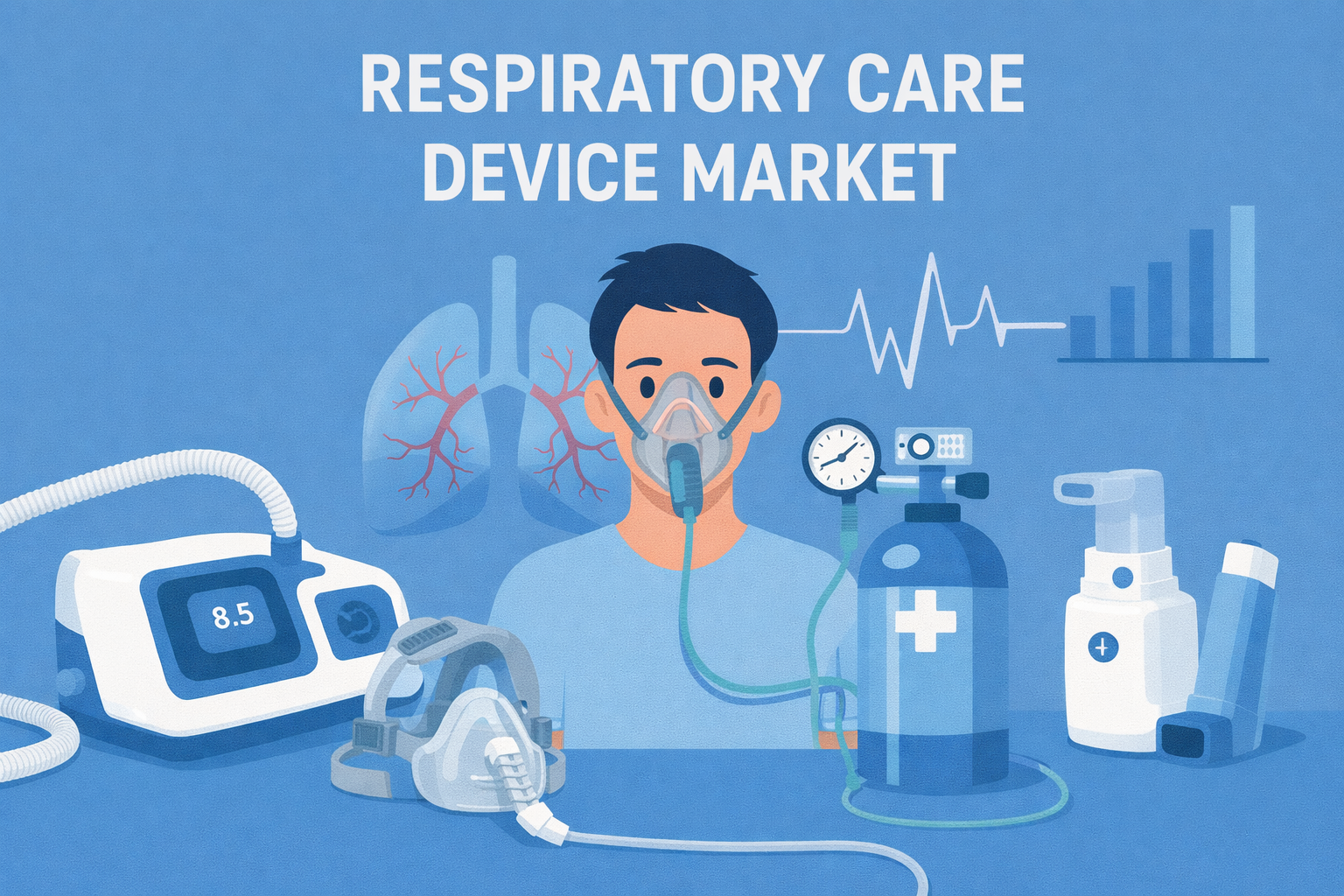
The global respiratory care devices market, a critical pillar of modern healthcare, is in the midst of a transformative and high-stakes evolution. No longer confined to the management of chronic conditions like COPD and sleep apnea, the sector has been irrevocably altered by the COVID-19 pandemic, which served as a stark, worldwide demonstration of the vital importance of advanced respiratory support. This heightened awareness, coupled with a relentless rise in air pollution, smoking prevalence, and an aging global population, has catalyzed a period of intense competition, strategic consolidation, and groundbreaking innovation. The market is now a dynamic arena where established medtech giants, agile innovators, and deep-pocketed investors are maneuvering to capture a share of its staggering projected growth.
According to SNS Insider, The Respiratory Care Devices Market Size was valued at USD 22.3 billion in 2023 and is expected to reach USD 43.35 billion by 2032, growing at a Compound Annual Growth Rate (CAGR) of 7.7% over the forecast period 2024-2032. This trajectory underscores a sector transitioning from steady growth to accelerated expansion, driven by technological convergence and strategic realignment.
The Consolidation Imperative: M&A as the Primary Engine
In recent years, Mergers and Acquisitions (M&A) have emerged as the dominant strategy for market players seeking rapid scale, portfolio diversification, and technological edge. The landscape is shifting from a fragmented field of specialists to a consolidated ecosystem of comprehensive solution providers.
The most telling example is the monumental acquisition of ResMed by Stryker Corporation, a deal valued at approximately $38 billion that was finalized earlier this year. This landmark move is not merely a purchase; it is a strategic statement. Stryker, a powerhouse in medical and surgical equipment, has effectively bought a direct channel into the home and hospital respiratory care space. ResMed brings its industry-leading portfolio in cloud-connected CPAP devices, masks, and ventilators, along with its pioneering digital health platform, AirView. This merger creates a behemoth with unparalleled reach from the acute care hospital bed to long-term chronic disease management in the home, setting a new benchmark for integrated care pathways.
Similarly, Philips (despite its recent recall challenges) and Medtronic continue to aggressively use M&A to fill portfolio gaps. Philips’ earlier acquisition of BioTelemetry enhanced its remote patient monitoring capabilities, directly feeding into its respiratory chronic care management strategies. Medtronic’s strategic purchases in the minimally invasive surgery and monitoring spaces are increasingly dovetailing with its ventilator and respiratory diagnostic offerings, aiming to provide a seamless suite of tools for perioperative and critical care.
These moves are calculated responses to market pressure. “The M&A frenzy in respiratory care is a direct reflection of the sector’s evolution,” says Dr. Anika Sharma, a medtech analyst at Global Health Insights. “Companies are no longer competing on a single device. They are competing on integrated ecosystems—connected devices, actionable patient data, and streamlined clinical workflows. Acquiring specialized tech or an established user base is faster and often more effective than internal R&D from scratch.”
Innovation Beyond the Box: The Rise of Smart and Connected Care
Parallel to the consolidation race is a wave of product innovation focused on connectivity, patient comfort, and proactive care. The modern respiratory device is increasingly a “smart” node in a broader Internet of Medical Things (IoMT) network.
Portable Oxygen Concentrators (POCs) are becoming lighter, more efficient, and more intelligent, with Bluetooth connectivity that syncs patient usage and vital sign data to clinician dashboards. Ventilators, especially for home use, are incorporating advanced algorithms for better patient-ventilator synchrony and earlier detection of exacerbations. The sleep therapy segment is witnessing a revolution with the introduction of maskless, non-invasive solutions for positional sleep apnea and a significant push towards improving patient adherence through user-friendly interfaces and automated therapy adjustments.
Digital therapeutics and AI-powered diagnostics are also making inroads. Companies are developing FDA-cleared software that can analyze breathing sounds captured via smartphone to screen for conditions like asthma or COPD exacerbations, potentially democratizing access to early diagnosis.
Top Players and the Competitive Landscape
The market remains a chessboard for a mix of diversified giants and focused leaders:
- ResMed (now a part of Stryker): A dominant force in sleep apnea and COPD therapy, with a robust cloud-connectivity platform.
- Koninklijke Philips N.V.: A full-portfolio player spanning diagnostics, ventilators, sleep therapy, and wearables, though working to rebuild trust post-recall.
- Medtronic plc: A leader in acute care ventilators with a strong footprint in hospital ICUs and operating rooms.
- GE HealthCare: Offers a wide range of respiratory diagnostics and monitoring equipment, critical in hospital settings.
- Fisher & Paykel Healthcare: Renowned for its innovative humidification systems and masks, particularly in neonatal and adult critical care.
- Masimo: While primarily a monitoring company, its pulse oximetry technology is integral to respiratory care, and its move into wearable continuous monitoring is blurring traditional device boundaries.
Challenges and the Road to 2032
The path to a $43.35 billion market is not without headwinds. Stringent regulatory approvals, reimbursement complexities, and supply chain vulnerabilities for critical semiconductors remain persistent challenges. The high cost of advanced devices also limits access in low- and middle-income countries, representing both a barrier and a future growth opportunity.
Furthermore, the specter of cybersecurity looms large as devices become more connected. Ensuring the protection of sensitive patient data from breaches is a non-negotiable cost of doing business in this new era.
Conclusion
The respiratory care devices market is breathing at full capacity, powered by the dual engines of strategic M&A and relentless technological innovation. The staggering growth forecast reflects a fundamental shift: respiratory care is moving from reactive treatment to proactive, personalized, and connected health management. As top players consolidate power and startups push the boundaries of what’s possible, the ultimate beneficiary is the patient, who stands to gain access to more effective, comfortable, and intelligent tools to manage their respiratory health. The race for market share is, in essence, a race to deliver the very breath of innovation to millions worldwide.