








The Paradox of Valuable Land That Won’t Sell
Rural land carries a contradiction. It is often deeply valuable, yet persistently difficult to sell. Owners may hold hundreds of acres outright, free of debt, and still find themselves unable to convert that asset into liquidity without sacrificing either time or price. This paradox has left many landowners frustrated—not because they lack opportunity, but because the market designed to serve them rarely functions as advertised.
Dirt4Dollars operates within this gap.
Why Rural Land Defies Traditional Real Estate Models
Across rural America, land differs fundamentally from residential or commercial real estate. There are no uniform comparables, no standardized buyer pools, and no predictable timelines. Conventional appraisal models are designed to compare improvements—flooring materials, square footage, fixtures—rather than biological and environmental variables. They are calibrated for carpets versus vinyl, not hardwood forests versus softwood stands; for granite countertops, not soil composition, water tables, timber maturity, or agricultural productivity. As a result, rural land is frequently evaluated through frameworks that fail to capture what actually determines its long-term worth. A property’s potential may lie in its forest composition, grazing viability, drainage patterns, or subdivision feasibility—factors that resist simplification and are often undervalued on paper.
As a result, rural land frequently sits idle. Listings expire. Owners receive sporadic interest, often accompanied by offers that assume urgency where none exists. For families managing inherited acreage, this stagnation can become a source of tension, especially when differing financial needs and emotional attachments collide.
When the Problem Isn’t Demand, but Structure
The difficulty, however, is not that rural land lacks demand. It is that the mechanisms connecting landowners to capable buyers are poorly aligned. Many traditional buyers seek steep discounts to compensate for uncertainty. Institutional capital hesitates because rural land often begins at what could be described as the “ground floor”—it carries no immediate structural improvements, no built income stream, and no tangible vertical value. Its worth is speculative until developed, cultivated, or improved. The buyer pool is therefore smaller, and liquidity thinner. Entitlement timelines, regulatory approvals, and use feasibility further amplify that risk, making institutions reluctant participants.
Landowners are left navigating a market that offers little guidance beyond patience or concession.
Dirt4Dollars approaches this misalignment from a different starting point. Rather than viewing land as a commodity awaiting liquidation, the company treats it as an asset requiring translation. Each property is evaluated not only for current condition, but for realistic future use—whether that means agricultural production, recreational ownership, rural residential development, or long-term holding.
Making Illiquid Land Work Through Flexible Deal Design
This distinction matters. Land becomes difficult to sell when its value is framed too narrowly. Dirt4Dollars works to widen that frame, identifying transaction structures that allow deals to move forward without forcing owners into steep discounts or indefinite waiting.
Seller financing plays a central role in this approach—not as a fallback, but as a deliberate structuring tool. Rather than forcing a full and immediate exit, transactions can be formatted to allow continued ownership participation for a defined period, while Dirt4Dollars manages development, positioning, and execution in the background. This allows landowners to do what they have done for years—hold land—while benefiting from professional legwork designed to maximize value.
In many cases, this structure allows sellers to become interest earners rather than simple exit participants. By capitalizing on their existing equity, they may realize greater overall returns than a traditional cash sale would produce, often with more favorable tax timing. Instead of surrendering value to intermediaries unfamiliar with rural markets, owners retain alignment with the upside while reducing operational burden.
The company’s emphasis on American-to-American financing reinforces this model. By minimizing reliance on banks, capital remains local and relationships remain direct. Buyers gain access without institutional friction. Sellers maintain participation without forfeiting leverage.
Navigating Family and Estate Land Without Escalation
Another obstacle in rural land sales lies in family and estate ownership. A significant percentage of rural acreage in the United States is inherited, and estate-related disputes remain among the most common sources of civil litigation. When multiple heirs hold fractional interests in a single property, disagreement over whether to sell, retain, or develop can stall transactions for years. Court proceedings often diminish both financial and relational outcomes, leaving land underutilized and families divided.
Dirt4Dollars has positioned itself as an intermediary capable of navigating these dynamics—structuring partial exits, phased sales, or subdivisions that honor differing priorities without escalating conflict. In these cases, progress depends less on speed and more on coordination.
Such flexibility requires restraint. Rather than maximizing price at all costs, the company prices land conservatively to ensure movement while preserving seller upside. Acreage is not fragmented into minimal parcels, and resale rates are set with awareness of local markets rather than national speculation. The objective is not merely to complete transactions, but to make next-generation ownership feasible—allowing new buyers to access land responsibly while ensuring existing owners capitalize fully on the value they have built.
Accountability as a Prerequisite for Trust
This discipline extends to capital partners as well. Dirt4Dollars has maintained a record of protecting investor principal even in adverse circumstances, including instances where failures at the title company level resulted in the loss of acquired property. In those cases, restitution was prioritized over defensibility—reinforcing the idea that long-term credibility outweighs short-term preservation.
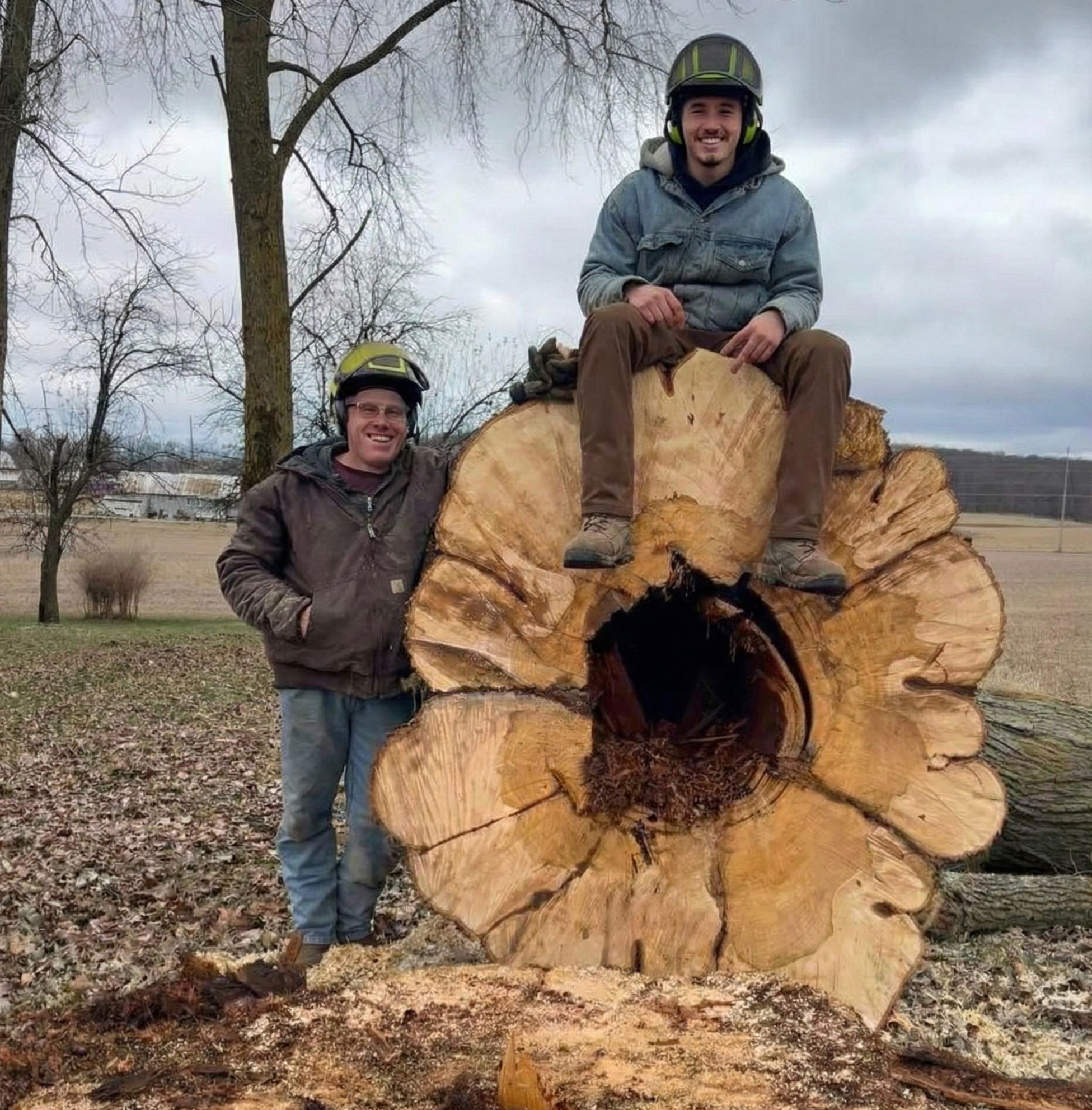
Underlying these practices is a cultural familiarity with rural land itself. The company’s operators come from farming and timber backgrounds, where land is understood through daily use—through soil management, timber cycles, and agricultural stewardship—rather than solely through financial modeling. This experience informs decisions around soil preservation, forest health, and lot configuration—factors often overlooked in purely financial models but essential to sustaining not only ownership, but thriving rural communities.
Solving for Complexity, Not Exploiting It
For many landowners, the difficulty begins before a listing ever goes live. A significant number are unaware of how illiquid rural land can be—how small the qualified buyer pool often is, or how heavily outcomes depend on structure rather than listing exposure. Without that clarity, owners frequently default to one of two paths: a steeply discounted investor offer or representation from an agent unfamiliar with the realities of rural acreage.
Dirt4Dollars approaches these situations differently. Rather than leading with price alone, the company begins with orientation. What does the seller actually want? A maximized exit? Structured income over time? Reduced tax burden? Continued involvement? The framework adjusts accordingly. The objective is not to push a predefined model, but to align the transaction with the owner’s goals—provided those goals are grounded in reasonable market expectations.
As rural America faces generational transitions, demographic shifts, and renewed interest from outside capital, the challenge of land liquidity will only intensify. The question is no longer whether land will change hands, but whether those transitions will be extractive or considered.
Dirt4Dollars offers one response: rural land is not difficult to sell because it lacks value, but because it requires informed structuring and realistic alignment between seller expectations and market mechanics.
More information about the company’s work and approach can be found on Facebook. Additional perspective from Arland Dillenburg Jr is available on Instagram.
In markets where land resists easy answers, progress often comes not from urgency, but from understanding.