Uncategorized
CPA Sheila Baroro Is Redefining What Financial Success Can Mean
By Silas Quinn
September 30, 2026
Field Notes
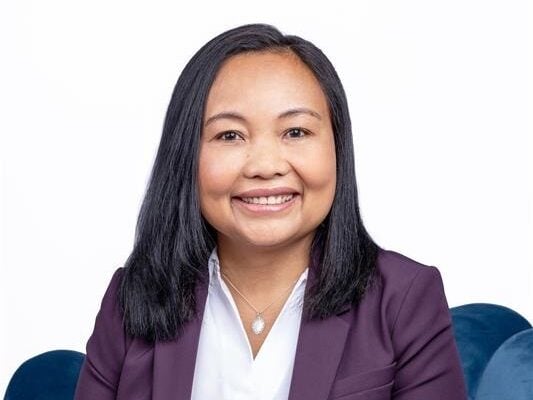
For much of her career, Sheila Baroro worked with financial success in terms that could be measured.
Budgets had to balance. Resources had to be managed carefully. Decisions carried consequences that appeared plainly in financial reports. Over more than 20 years as a CPA and finance leader, including responsibility for multimillion dollar budgets across nonprofit and public sectors, she developed a career around financial accountability.
Then her understanding of success became more personal.
Baroro began recognizing a distinction that numbers alone could not capture. A person could be financially accomplished and still have a troubled relationship with money. Stability on paper did not necessarily translate into a feeling of security. Professional success could coexist with fear, limiting beliefs or patterns rooted in earlier experiences.
That insight now sits at the center of her work as founder of Rise & Rebuild Academy, certified Trauma of Money Practitioner and transformational speaker.
When Achievement Does Not Bring Peace
There is an assumption embedded in many conversations about money: once someone earns enough, saves enough or reaches the right financial milestone, a sense of security will follow.
Baroro’s experience led her to question that sequence.
“My own journey taught me that financial success isn’t always the same as financial peace,” she says. “That’s why my mission is to help people heal their relationship with money, release the limiting beliefs shaped by trauma and life experiences, and create lives of confidence, freedom, and true abundance.”
The distinction is central to how she now approaches financial wellbeing.
Financial capability still matters. People need practical knowledge to make informed choices. Yet Baroro believes those choices are also influenced by personal history, including experiences that can shape how someone interprets risk, security, scarcity and abundance.
Understanding that history can help explain why greater financial knowledge does not automatically lead to different behavior.
From Finance Executive to Trauma of Money Practitioner
Baroro’s move into this work represents an expansion of her finance career rather than a rejection of it.
Her CPA background gives her a practical understanding of how money functions in organizations and everyday decision making. Becoming a certified Trauma of Money Practitioner added another lens, one concerned with why people develop particular patterns around money in the first place.
Through the Trauma of Money methodology, she helps individuals explore the beliefs and experiences influencing their financial behavior.
That can mean examining assumptions that have become so familiar they no longer feel like assumptions at all.
A person who experienced instability earlier in life, for example, may carry certain beliefs about security into adulthood. Others may connect money with identity, worth or control. The specific experience varies, which is precisely why Baroro argues that financial wellbeing cannot always be reduced to a universal formula.
A Broader Conversation About Money
Baroro is taking that message beyond individual financial conversations.
She currently speaks at conferences, organizational programs, podcasts and community events across Canada, with virtual presentations available to audiences internationally. Her Trauma of Money keynotes and workshops can be booked throughout the year.
Through Rise & Rebuild Academy and her work in speaking, education and consulting, Baroro is bringing financial expertise into conversation with personal transformation.
It is a direction shaped by an unusual combination of experience. She understands the technical discipline of finance because she has spent decades practicing it. She also understands, through her own journey and professional training, that financial decisions are made by people whose histories do not disappear when they sit down to review the numbers.
For Baroro, that changes the question.
Financial success can still include stronger savings, responsible planning and greater stability. But she believes another measure deserves a place alongside them: whether a person can experience money without being continually governed by the beliefs and experiences that once shaped their relationship with it.
That is a harder outcome to capture on a spreadsheet.
For the people seeking financial peace as well as financial progress, it may be one of the more meaningful measures of all.
Learn More
Learn more about Sheila Baroro’s work at Rise & Rebuild Academy or visit SMB Finance Consulting for information about her financial consulting work.