









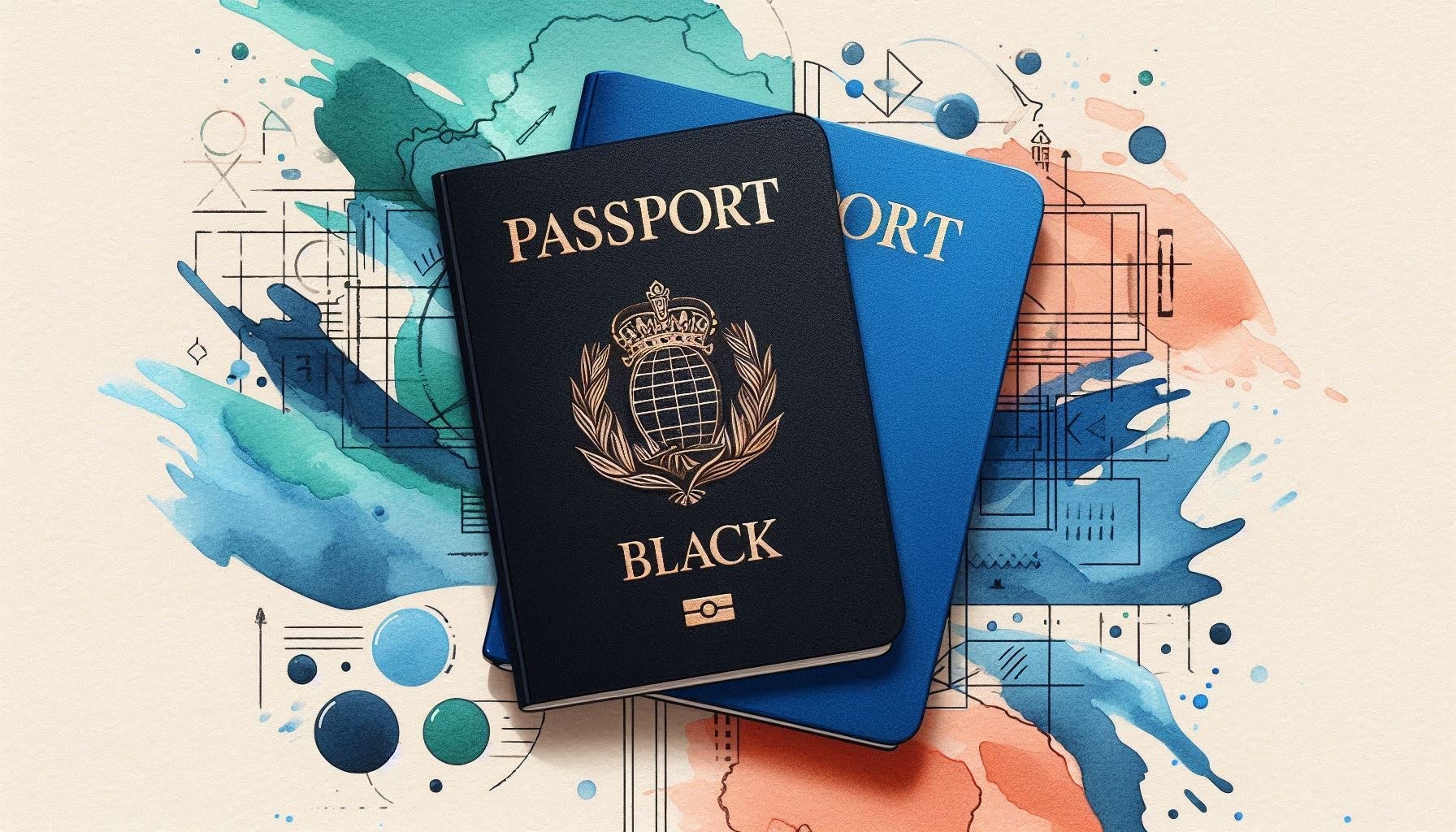
The color, symbolism, and politics behind the black diplomatic passport, and why the document’s dark cover means far more as a state signal than as a universal legal rule.
WASHINGTON, DC.
When people ask why diplomatic passports are black, they are usually reaching for a simple visual explanation of power, privilege, and official state status, even though the real answer is broader, more political, and far less uniform than the phrase black passport suggests. In practical terms, black is often used because it instantly separates a diplomatic document from an ordinary civilian passport, conveys seriousness and authority, and helps mark the bearer as someone traveling in an official governmental capacity rather than for tourism, family visits, or private business.
That distinction matters because the diplomatic passport is not just another version of an ordinary passport with a darker cover and a more dramatic reputation, but a specialized state document tied to official representation abroad. In the United States, the State Department’s special issuance passport guidance makes clear that diplomatic passports are reserved for defined categories of federal personnel, certain titled individuals, and eligible family members connected to official assignments, which immediately shows that the document is about state functions rather than personal prestige.
Black became associated with diplomatic travel because governments needed distinction before they needed branding.
Long before passport design became a subject of consumer fascination, governments needed a quick visual way to separate categories of travel documents that served very different purposes within the state. A regular passport was meant to identify a citizen moving through civilian channels, while a diplomatic passport was meant to tell foreign ministries, consulates, and border officials that the traveler belonged to a narrower official category linked to representation, protocol, and public duty.
A black or very dark cover served that purpose well because it looked formal, stood apart from ordinary document colors, and projected a seriousness that fit the world of official travel better than brighter or more decorative tones might have done. In that sense, black became useful not because international law declared it sacred, but because governments wanted a cover color that felt dignified, distinctive, and difficult to mistake for a standard civilian passport in the hands of immigration or diplomatic staff.
That visual separation still matters now, because diplomacy remains a world of categorization, signals, and controlled access, even in an era dominated by databases, machine-readable zones, chips, and digital verification. A diplomatic passport must still communicate something at a glance, and a dark cover continues to do that work effectively because it looks official before a single page is opened.
There is no worldwide rule that says diplomatic passports must be black.
This is the most important myth to correct, because many readers assume there is a universal treaty rule requiring diplomatic passports to be black when no such global legal requirement exists. Black is common in public imagination and in some national systems, but diplomatic passports are not color-standardized worldwide as popular search results often imply, and governments continue to use burgundy, maroon, red, green, or other dark shades depending on their own administrative traditions and national design choices.
That is why the color question is really about symbolism and state preference rather than hard international law. The diplomatic passport belongs to a legal framework built around recognition, accreditation, mission status, and official function, while the cover color belongs to a more visible layer of political design where countries express administrative order, national identity, and official hierarchy through appearance.
In other words, black is meaningful but not mandatory, and that difference explains why the black passport has become both a useful shorthand and an oversimplification. People remember the color because it is memorable and visually loaded, but governments choose covers based on a mix of symbolism, tradition, distinction, and political messaging rather than a single binding international formula.
The color black works because it communicates authority, restraint, and hierarchy without needing explanation.
Black has long carried associations with formality, seriousness, discipline, and institutional power, which is one reason it suits documents linked to diplomacy, sovereignty, and official protocol. A black diplomatic passport looks restrained rather than flashy, and that restraint matters because diplomacy is still built on ceremonial order, rank, and quiet signals of status rather than on the louder cues that define commercial branding or mass consumer identity.
There is also a practical design logic behind the symbolism, because darker covers hide wear more effectively, provide a strong contrast to gold or metallic state crests, and create an immediate visual distinction when multiple document categories are handled within government channels. Those practical advantages may sound minor compared with grand talk about immunity and state power, yet in bureaucratic systems, small design choices often become permanent precisely because they do their job efficiently while also looking institutionally appropriate.
The black cover looks serious, official, and separate, and that is exactly what many governments want a diplomatic document to communicate before anyone begins checking the name, status, or posting inside.
Passport color has always had a political side, and diplomatic covers are no exception.
Passport colors are never just about beauty or printing preference, because they often carry messages about alignment, identity, region, and national history, especially when governments want the document itself to reflect political change. A useful example appears in a Reuters report on Britain’s return to blue passports after Brexit, in which the shift away from the old burgundy European Union style was openly framed as a return to national identity and sovereign symbolism.
That episode did not involve a diplomatic passport, but it captured the larger point perfectly by showing how emotionally charged passport color can become once questions of sovereignty, belonging, and politics enter the discussion. If an ordinary passport color can become a symbol of national autonomy and post-EU identity, then it is not difficult to understand why the darker diplomatic passport has come to represent official seriousness, state presence, and the more ceremonial face of sovereignty abroad.
The same logic helps explain why black diplomatic passports continue to attract disproportionate public fascination: their color invites readers to see them as more than travel documents. They look like state objects, and in a very real sense, they are state objects, since they exist not primarily for personal travel but to mark a traveler as someone moving through the international system on behalf of government power.
The black passport is about state coding, not a universal extra bundle of rights.
One reason the color question remains so misunderstood is that the public often assumes the dramatic cover must correspond to an equally dramatic set of legal privileges that automatically accompany the holder everywhere. That assumption takes the symbol too far, because the black passport may indicate a category of official travel, but the legal consequences depend on accreditation, mission role, host-country recognition, and diplomatic status rather than on the cover color alone.
A diplomatic passport can facilitate official travel and place a traveler in a more specialized administrative lane, yet it does not create a free-floating legal shield simply because it looks important. The document’s appearance is therefore better understood as a code for function and hierarchy than as proof that the bearer possesses a universal and self-executing layer of privilege in every jurisdiction.
It signals that the bearer may belong to an official diplomatic framework, but the actual force of that framework depends on what the sending state, the receiving state, and diplomatic law recognize behind the passport rather than on the color seen at first glance.
That is why diplomatic passports are often more misunderstood than ordinary passports.
A regular passport usually means what ordinary travelers think it means, because it proves citizenship and identity for civilian movement through well-understood channels like vacations, family visits, education, relocation, and private commerce. A diplomatic passport, by contrast, sits inside a narrower world of official protocol, state representation, and legal categorization, which makes it much easier for the public to confuse symbolism with substance.
The black cover intensifies that confusion because it looks rare, secretive, and powerful, which encourages the mistaken idea that the document is a personal status upgrade rather than a controlled instrument of state work. In reality, governments issue diplomatic passports because they need particular people to travel abroad in a recognizable official role, and that need says more about the state than it does about the private worth of the individual carrying the document.
This is one reason the document continues to inspire so many myths about immunity, invisibility, and elite privilege, because the outward symbolism is stronger than the public’s understanding of the administrative rules beneath it. The black passport looks like a condensed symbol of authority, and symbols are always easier to remember than the legal categories that govern how the document works in practice.
The politics of color also help governments separate diplomacy from ordinary national branding.
Most passports do more than identify a traveler; they also present a visual story about the state that issued them, and that story changes depending on which category of traveler the government wants to emphasize. A civilian passport often participates in a broader national brand aimed at mass use, everyday recognition, and ordinary public identity, while a diplomatic passport is part of a smaller visual world centered on protocol, hierarchy, and formal state business.
Seen that way, the black passport is less a mysterious exception than a form of visual bureaucracy. It tells the international system that the traveler is not merely another citizen on the move, but someone whose movement is meant to be interpreted through state function, mission status, and the rituals of intergovernmental recognition.
Why the black passport continues to attract public attention in 2026.
The answer is partly visual and partly cultural, because the document sits at the intersection of law, secrecy, prestige, protocol, and the public imagination of how power works behind closed doors. Readers do not become curious about black diplomatic passports only because of border rules, but because the cover itself evokes a world of embassies, motorcades, classified conversations, immunity disputes, and state symbolism.
That continuing fascination also explains why private commentary keeps returning to the subject, including Amicus discussions of diplomatic passports and immunity and a separate Amicus explainer on what to know about diplomatic passports and their legal meaning. Those pieces reflect the same public curiosity that keeps resurfacing around the black passport, because the document appears simple on the surface while the law, politics, and symbolism behind it remain layered and easy to overstate.
In 2026, that curiosity has only grown stronger because international travel is more digitized, border systems are more integrated, and official status is more scrutinized than many travelers realize. The darker diplomatic passport, therefore, stands out even more sharply as a visible reminder that some movement still happens through official state channels rather than through the ordinary civilian pathways most travelers know best.
The cleanest answer is that black became the diplomatic color in many systems because it looks authoritative, separates official travel from ordinary travel, and fits the politics of state symbolism, not because a treaty forced every government to choose it.
That is why the black diplomatic passport serves more as a visual signal than as a universal legal rule: the cover communicates seriousness, hierarchy, and official representation, while the actual legal consequences still depend on status, accreditation, and the state relationship behind the bearer.
The black passport endures because it remains a symbol of state authority in a world that continues to rely on visible distinctions between private travelers and official representatives. Its meaning is therefore political, bureaucratic, and symbolic all at once, which is exactly why the question of color keeps resurfacing, and why the black diplomatic passport remains one of the most recognizable and misunderstood documents in international affairs.