








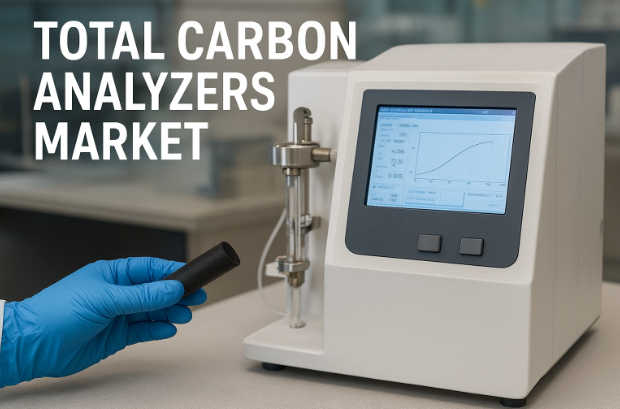
Total carbon analyzers have emerged as indispensable instruments across environmental laboratories, wastewater treatment facilities, industrial processing units, and research institutions striving for enhanced carbon measurement accuracy. As global sustainability efforts intensify, industries are under mounting pressure to monitor and regulate carbon content in water, soil, gases, and various materials. This growing emphasis has not only elevated the importance of precise analytical tools but has also driven leading manufacturers to innovate advanced total carbon analyzers equipped with faster processing, greater sensitivity, and automated workflows.
In this comprehensive guide, we explore the significance of total carbon analyzers, the key technologies driving advancements, and the prominent companies shaping this specialized analytical equipment market. By examining leading trends and market influences, readers will gain essential insight into the direction of carbon analysis technology in 2025 and beyond.
Understanding the Role of Total Carbon Analyzers
Total carbon analyzers detect and quantify the amount of carbon in a sample by breaking it down into its elemental components. Typically, the analysis includes total organic carbon (TOC), total inorganic carbon (TIC), and total carbon (TC). These measurements significantly contribute to environmental compliance, resource monitoring, industrial quality control, and sustainability assessments.
Industries such as pharmaceuticals, chemicals, energy, semiconductors, and municipal wastewater treatment rely heavily on these analyzers to maintain strict regulatory standards. As regulations become more stringent worldwide, the demand for high-performance total carbon analyzers continues to rise.
Modern analyzers feature automated sample handling, high-temperature combustion or UV-persulfate oxidation, and digital calibration capabilities. Their integration into laboratory systems enhances accuracy, reduces human error, and speeds up throughput. This has positioned total carbon analyzers as vital assets in laboratories working on environmental monitoring, contamination detection, and industrial process optimization.
Market Outlook and Key Statistical Insight
The Total Carbon Analyzers Market size was valued at USD 1.3 billion in 2024 and is expected to reach USD 2.1 billion by 2032, growing at a CAGR of 5.71% during 2025–2032. This expansion is largely attributed to the rising global emphasis on reliable water quality assessment, strict environmental mandates in developed and emerging countries, and the increasing use of carbon monitoring tools in industrial production. Companies across sectors are strengthening their monitoring protocols to align with sustainability goals and reduce their ecological footprint. As a result, manufacturers are focusing on launching systems with enhanced accuracy, automation, and compliance features. The emerging trend of integrating IoT and digital connectivity into laboratory instruments is expected to further accelerate market growth, enabling remote monitoring, predictive maintenance, and real-time data analytics. With expanding industrial activities and heightened environmental accountability worldwide, the demand for advanced total carbon analyzers is projected to remain robust through the next decade.
Leading Companies in the Total Carbon Analyzer Market
A number of globally recognized analytical technology companies dominate the production of total carbon analyzers. While each brings its own strengths and innovations, they collectively push the industry toward more precise, user-friendly, and sustainable analysis techniques.
- Shimadzu Corporation
Known for its advanced analytical instruments, Shimadzu offers high-performance TOC analyzers widely used in environmental and industrial laboratories. Their systems are recognized for excellent reliability, automated functions, and simplified user interfaces. - Teledyne Tekmar
A prominent leader in combustion-based TOC analytics, Teledyne’s instruments deliver exceptional detection sensitivity. Their solutions serve industries requiring ultra-pure water analysis, such as pharmaceuticals and semiconductors. - Hach Company
Renowned for water quality instruments, Hach produces TOC analyzers designed for municipal wastewater facilities and industrial water treatment plants. Their systems emphasize operational efficiency and compliance with global standards. - Mettler-Toledo International
Mettler-Toledo’s analytical instruments are widely used in quality control laboratories. Their total carbon analyzers are praised for precision, robust construction, and intuitive software capabilities. - GE Analytical Instruments (Sievers)
Sievers analyzers are often preferred in pharmaceutical and biotechnology settings due to their exceptional accuracy and reliability. Their TOC systems integrate advanced sensing mechanisms and automated workflows. - Elementar Analysensysteme GmbH
Elementar specializes in elemental analysis devices, including premium total carbon analyzers tailored for research laboratories and industrial applications.
These companies continuously refine their technologies to meet rising regulatory expectations and support increasingly complex analytical environments.
Future Prospects and Industry Direction
As sustainability and environmental responsibility continue to drive regulatory and industrial priorities, total carbon analyzers will remain essential across multiple sectors. The increasing focus on monitoring carbon footprints, improving wastewater treatment efficiency, and enhancing industrial process control reinforces their significance.
Continued digital transformation is expected to further influence the industry. Cloud-connected analyzers, real-time reporting dashboards, and predictive analytics will reshape the way laboratories operate. Additionally, the push toward automation will remain strong, enabling laboratories to maintain higher throughput with fewer manual interventions.
The market is likely to see increased competition among leading players, with companies striving to differentiate through innovation, accuracy, and operational simplicity.
Conclusion
Total carbon analyzers stand at the intersection of technology, environmental stewardship, and industrial progress. As global industries adopt stricter compliance frameworks and pursue sustainable growth, the importance of precise carbon measurement equipment becomes even more evident. The leading companies in this space are not only delivering sophisticated analytical instruments but are also shaping the future of environmental testing through smart automation, enhanced detection methods, and improved user experience. With steady market growth and technological transformation underway, total carbon analyzers will continue to play a crucial role in enabling cleaner, more responsible global development.